Luciencor Encorafenib 75mg Capsules 90's
Manufacturer: LUCIUS PHARMACEUTICALS
Salt: ENCORAFENIB 75MG
Category: Anti-Cancer
Price: $1395
Availability: In Stock
Encorafenib is an oral targeted anticancer medicine belonging to the class of BRAF kinase inhibitors. It works by blocking abnormal signaling caused by certain mutations in the BRAF gene, thereby helping to slow or stop the growth of cancer cells.
Encorafenib is used in combination with other anticancer medicines for cancers containing specific BRAF mutations. Current U.S. prescribing information includes indications for BRAF V600E/V600K-mutated unresectable or metastatic melanoma, BRAF V600E-mutated metastatic colorectal cancer, and BRAF V600E-mutated metastatic non-small-cell lung cancer.
- BRAF V600E or V600K mutation-positive unresectable or metastatic melanoma, in combination with binimetinib.
- BRAF V600E mutation-positive metastatic colorectal cancer (CRC), in combination with cetuximab-based treatment.
- BRAF V600E mutation-positive metastatic non-small-cell lung cancer (NSCLC), in combination with binimetinib.
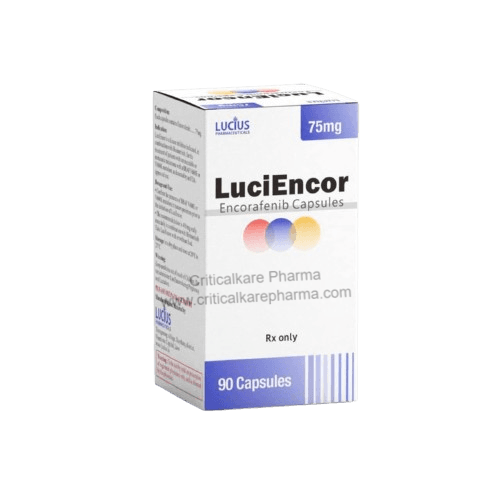
Luciencor Encorafenib 75mg Capsules 90's
Product Information
What is Luciencor Encorafenib 75mg Capsules 90's?
Encorafenib is an oral targeted anticancer medicine belonging to the class of BRAF kinase inhibitors. It works by blocking abnormal signaling caused by certain mutations in the BRAF gene, thereby helping to slow or stop the growth of cancer cells.
Encorafenib is used in combination with other anticancer medicines for cancers containing specific BRAF mutations. Current U.S. prescribing information includes indications for BRAF V600E/V600K-mutated unresectable or metastatic melanoma, BRAF V600E-mutated metastatic colorectal cancer, and BRAF V600E-mutated metastatic non-small-cell lung cancer.
Indications for Luciencor Encorafenib 75mg Capsules 90's
- BRAF V600E or V600K mutation-positive unresectable or metastatic melanoma, in combination with binimetinib.
- BRAF V600E mutation-positive metastatic colorectal cancer (CRC), in combination with cetuximab-based treatment.
- BRAF V600E mutation-positive metastatic non-small-cell lung cancer (NSCLC), in combination with binimetinib.
Therapeutic Effects of Luciencor Encorafenib 75mg Capsules 90's
Encorafenib selectively inhibits BRAF kinase activity.
Certain cancers contain activating BRAF mutations that cause continuous signaling through the MAPK pathway, promoting cancer-cell growth and survival.
By inhibiting mutated BRAF, encorafenib can:
- Reduce abnormal cancer-cell signaling.
- Slow cancer cell proliferation
- Help control tumor growth.
- Potentially delay disease progression
Encorafenib is generally used as part of a combination treatment regimen, rather than as an interchangeable standalone anticancer medicine.
How to consume Luciencor Encorafenib 75mg Capsules 90's
Encorafenib is taken orally.
The patient should:
- Take it exactly as prescribed.
- Swallow the capsules as directed by the treating physician.
- Take the medicine at approximately the same time each day.
- Not change the dose or stop treatment without medical advice.
- Avoid grapefruit and grapefruit juice.
The total daily dose depends on the cancer indication and combination therapy. For example, the approved regimen for melanoma and BRAF V600E-mutated metastatic NSCLC is different from the CRC regimens.
If a dose is missed:
The patient should follow the instructions in the prescribing information/Medication Guide or contact the treating oncology team rather than independently doubling the next dose.
Side Effects of Luciencor Encorafenib 75mg Capsules 90's
Common:
The adverse effects vary according to the cancer being treated and the combination regimen.
Reported adverse reactions can include:
- Fatigue
- Nausea
- Diarrhea
- Vomiting
- Abdominal pain
- Decreased appetite
- Rash
- Constipation
- Joint or musculoskeletal pain
- Headache
- Skin reactions
- Visual disturbances
For the NSCLC combination, commonly reported reactions include fatigue, nausea, diarrhea, musculoskeletal pain, vomiting, abdominal pain, visual impairment, constipation, dyspnea, rash, and cough.
Serious:
Seek prompt medical attention for symptoms suggesting:
New primary malignancies:
Encorafenib may increase the risk of new cutaneous and non-cutaneous malignancies. New or changing skin lesions should be reported promptly.
Cardiomyopathy:
Encorafenib can cause decreased cardiac function. Symptoms such as shortness of breath, swelling, or unexplained fatigue should be reported.
Hepatotoxicity:
Liver injury can occur. Regular liver-function monitoring may be required.
Hemorrhage:
Serious bleeding can occur.
Uveitis and eye problems:
Eye inflammation and other ocular problems can occur. New eye pain, redness, blurred vision, or visual changes should be reported promptly.
QT prolongation:
Encorafenib can prolong the QT interval, potentially causing abnormal heart rhythms.
Severe skin reactions:
Serious dermatological reactions should be evaluated promptly.
Embryo-fetal toxicity
Encorafenib may cause fetal harm.
Drug Interactions
Always tell the doctor/pharmacist about prescription medicines, OTC medicines, vitamins, and herbal products before starting treatment.
Medicines that prolong the QT interval should generally be avoided because encorafenib itself can prolong QTc.
Grapefruit and grapefruit juice should be avoided.
Medicines that may decrease encorafenib levels:
Strong CYP3A4 inducers can lower encorafenib concentrations and potentially reduce its effectiveness and should generally be avoided.
Medicines that may increase encorafenib levels:
Strong or moderate CYP3A4 inhibitors can increase encorafenib concentrations and potentially increase adverse effects. These combinations should generally be avoided; if unavoidable, the encorafenib dose may need to be reduced according to prescribing guidance.
Examples can include certain:
- Azole antifungals
- Macrolide antibiotics
- Other CYP3A4-inhibiting medicines
Storage & Handling
- At 20°C–25°C (68°F–77°F).
- Excursions between 15°C and 30°C (59°F–86°F) are permitted.
- In the original bottle.
- With the desiccant inside the bottle.
- Keep the bottle tightly closed.
- Protect from moisture.
- Do not remove the desiccant.
- Keep out of reach of children.
- It does not require refrigerated storage.
Expert Advice
- Confirm the BRAF mutation before initiating therapy according to the indication.
- Encorafenib is normally prescribed in combination with other anticancer medicines, and the combination should not be changed without the oncologist's direction.
- Inform your oncologist about all medicines and supplements you take.
- Avoid grapefruit and grapefruit juice.
- Report new skin lesions or changes in existing moles.
- Report new or worsening visual symptoms immediately.
- Inform your doctor about heart disease or previous rhythm abnormalities.
- Liver function and other relevant laboratory parameters should be monitored as recommended.
- Do not discontinue treatment independently even if you feel well.
Worldwide Shipping & Delivery
We provide specialized tracked delivery for Luciencor Encorafenib 75mg Capsules 90's to multiple countries across the globe. Our logistics network ensures temperature-controlled handling for sensitive oncology medications.
- USA Shipping
- UK Delivery
- UAE & Middle East
- Germany & EU
- Australia
- Canada
Professional Safety Guidelines for Luciencor Encorafenib 75mg Capsules 90's

Pregnancy
UnsafeNot recommended during pregnancy unless specifically determined necessary by the treating physician. Encorafenib can cause embryo-fetal harm. Females of reproductive potential should use effective non-hormonal contraception during treatment and for 2 weeks after the last dose, according to current U.S. labeling. Inform the doctor immediately if pregnancy occurs or is suspected.

BreastFeeding
UnsafeBreastfeeding is not recommended during treatment with encorafenib and for 2 weeks after the last dose.
Liver
Consult your doctorEncorafenib can cause hepatotoxicity. Patients with liver impairment require appropriate medical assessment and monitoring, and liver-function tests may be performed during treatment.

Lungs
Consult your doctorPatients should report new or worsening shortness of breath, cough or other respiratory symptoms promptly. This is particularly important in patients receiving encorafenib in combination with binimetinib.

Alcohol
Consult your doctorThere is no specific universal prohibition on alcohol in the prescribing information, but limiting or avoiding alcohol is generally advisable during cancer treatment, particularly if the patient has liver problems, significant fatigue, nausea or is taking other medicines that interact with alcohol.

Driving
UnsafeEncorafenib may cause fatigue, dizziness or visual disturbances in some patients. Patients should avoid driving or operating machinery if their ability to do so safely is affected.
Kidney
Consult your doctorTell your doctor if you have kidney disease or impaired renal function. The oncologist should determine whether any additional monitoring or dose adjustment is necessary.