Lucipral Pralsetinib 100mg Capsules 120's
Manufacturer: LUCIUS PHARMACEUTICALS
Salt: PRALSETINIB 100MG
Category: Anti-Cancer
Price: $540
Availability: In Stock
Pralsetinib Capsules contain Pralsetinib, an orally administered, highly selective REarranged during Transfection (RET) kinase inhibitor indicated for the treatment of specific RET fusion-positive or RET mutation-positive cancers. By selectively inhibiting abnormal RET signaling, Pralsetinib suppresses tumor cell growth and proliferation, thereby slowing disease progression and improving clinical outcomes in patients with RET-driven malignancies. Pralsetinib represents a precision medicine approach, targeting the genetic alterations responsible for tumor development while minimizing effects on normal cells.
Pralsetinib is indicated for the treatment of adult patients with metastatic RET fusion-positive non-small cell lung cancer (NSCLC), advanced or metastatic RET fusion-positive thyroid cancer requiring systemic therapy and who are radioactive iodine-refractory (if radioactive iodine is appropriate), and advanced or metastatic RET-mutant medullary thyroid cancer (MTC) requiring systemic therapy. Treatment eligibility should be confirmed using an FDA-approved or appropriately validated diagnostic test to identify RET gene alterations.
Before initiating therapy, patients should inform their healthcare provider about their complete medical history, including liver disease, lung disease, high blood pressure, bleeding disorders, previous radiation therapy, planned surgery, pregnancy or breastfeeding, and all prescription medicines, over-the-counter medications, herbal supplements, and vitamins they are currently taking. Because Pralsetinib is primarily metabolized by the CYP3A enzyme, concomitant use of strong CYP3A inhibitors or inducers may significantly alter drug exposure and require appropriate clinical management.
Regular monitoring is recommended throughout treatment, including assessment of blood pressure, liver function tests, complete blood counts, and clinical signs of pulmonary toxicity or bleeding. Patients should promptly report symptoms such as shortness of breath, persistent cough, fever, severe headache, vision changes, unusual bruising, or signs of infection to their healthcare provider.
Pralsetinib capsules should only be used under the supervision of a qualified oncologist or healthcare professional experienced in the management of targeted cancer therapies. When used in appropriately selected patients with RET-altered cancers, Pralsetinib provides a highly targeted treatment option that may improve response rates, delay disease progression, and enhance overall quality of life.
- Treat metastatic RET fusion-positive non-small cell lung cancer (NSCLC) in adult patients whose tumors harbor a RET gene fusion.
- Treat advanced or metastatic RET-mutant medullary thyroid cancer (MTC) in adults and pediatric patients 12 years of age and older who require systemic therapy.
- Treat advanced or metastatic RET fusion-positive thyroid cancer in adults and pediatric patients 12 years of age and older who require systemic therapy and are radioactive iodine-refractory (if radioactive iodine is appropriate).
- Inhibit abnormal RET kinase activity, thereby blocking the signaling pathways that promote cancer cell growth, proliferation, and survival.
- Slow disease progression by reducing tumor growth and helping to delay the spread of RET-driven cancers.
- Improve clinical outcomes, including objective tumor response and duration of response, in patients with RET-altered malignancies when administered according to the prescribed treatment regimen.
- Provide a precision-targeted therapy for patients with RET gene alterations, offering a personalized treatment approach compared with conventional chemotherapy in appropriate clinical settings.
Important Note:
Pralsetinib capsules should be used only under the supervision of a qualified oncologist or healthcare professional experienced in cancer treatment. The medicine should be taken exactly as prescribed and continued until disease progression or unacceptable toxicity occurs. Regular clinical monitoring and laboratory assessments are recommended throughout treatment to evaluate efficacy, monitor for adverse reactions, and determine whether dose modifications are required.
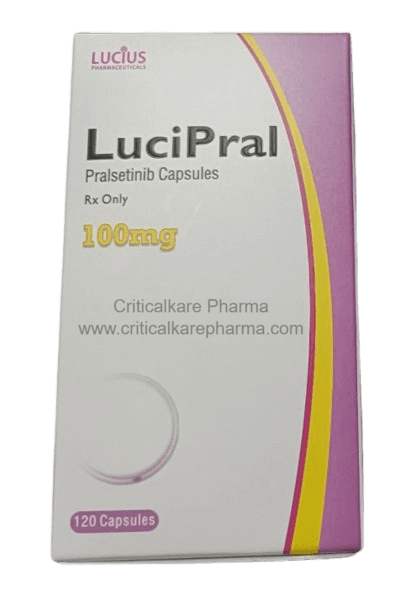
Lucipral Pralsetinib 100mg Capsules 120's
Product Information
What is Lucipral Pralsetinib 100mg Capsules 120's?
Pralsetinib Capsules contain Pralsetinib, an orally administered, highly selective REarranged during Transfection (RET) kinase inhibitor indicated for the treatment of specific RET fusion-positive or RET mutation-positive cancers. By selectively inhibiting abnormal RET signaling, Pralsetinib suppresses tumor cell growth and proliferation, thereby slowing disease progression and improving clinical outcomes in patients with RET-driven malignancies. Pralsetinib represents a precision medicine approach, targeting the genetic alterations responsible for tumor development while minimizing effects on normal cells.
Pralsetinib is indicated for the treatment of adult patients with metastatic RET fusion-positive non-small cell lung cancer (NSCLC), advanced or metastatic RET fusion-positive thyroid cancer requiring systemic therapy and who are radioactive iodine-refractory (if radioactive iodine is appropriate), and advanced or metastatic RET-mutant medullary thyroid cancer (MTC) requiring systemic therapy. Treatment eligibility should be confirmed using an FDA-approved or appropriately validated diagnostic test to identify RET gene alterations.
Before initiating therapy, patients should inform their healthcare provider about their complete medical history, including liver disease, lung disease, high blood pressure, bleeding disorders, previous radiation therapy, planned surgery, pregnancy or breastfeeding, and all prescription medicines, over-the-counter medications, herbal supplements, and vitamins they are currently taking. Because Pralsetinib is primarily metabolized by the CYP3A enzyme, concomitant use of strong CYP3A inhibitors or inducers may significantly alter drug exposure and require appropriate clinical management.
Regular monitoring is recommended throughout treatment, including assessment of blood pressure, liver function tests, complete blood counts, and clinical signs of pulmonary toxicity or bleeding. Patients should promptly report symptoms such as shortness of breath, persistent cough, fever, severe headache, vision changes, unusual bruising, or signs of infection to their healthcare provider.
Pralsetinib capsules should only be used under the supervision of a qualified oncologist or healthcare professional experienced in the management of targeted cancer therapies. When used in appropriately selected patients with RET-altered cancers, Pralsetinib provides a highly targeted treatment option that may improve response rates, delay disease progression, and enhance overall quality of life.
Indications for Lucipral Pralsetinib 100mg Capsules 120's
- Treat metastatic RET fusion-positive non-small cell lung cancer (NSCLC) in adult patients whose tumors harbor a RET gene fusion.
- Treat advanced or metastatic RET-mutant medullary thyroid cancer (MTC) in adults and pediatric patients 12 years of age and older who require systemic therapy.
- Treat advanced or metastatic RET fusion-positive thyroid cancer in adults and pediatric patients 12 years of age and older who require systemic therapy and are radioactive iodine-refractory (if radioactive iodine is appropriate).
- Inhibit abnormal RET kinase activity, thereby blocking the signaling pathways that promote cancer cell growth, proliferation, and survival.
- Slow disease progression by reducing tumor growth and helping to delay the spread of RET-driven cancers.
- Improve clinical outcomes, including objective tumor response and duration of response, in patients with RET-altered malignancies when administered according to the prescribed treatment regimen.
- Provide a precision-targeted therapy for patients with RET gene alterations, offering a personalized treatment approach compared with conventional chemotherapy in appropriate clinical settings.
Important Note:
Pralsetinib capsules should be used only under the supervision of a qualified oncologist or healthcare professional experienced in cancer treatment. The medicine should be taken exactly as prescribed and continued until disease progression or unacceptable toxicity occurs. Regular clinical monitoring and laboratory assessments are recommended throughout treatment to evaluate efficacy, monitor for adverse reactions, and determine whether dose modifications are required.
Therapeutic Effects of Lucipral Pralsetinib 100mg Capsules 120's
Pralsetinib binds to the RET kinase with high selectivity, inhibiting its phosphorylation and downstream signaling through pathways such as MAPK/ERK and PI3K/AKT, which are responsible for tumor cell growth and survival. Inhibition of these signaling pathways leads to reduced tumor cell proliferation, induction of apoptosis (programmed cell death), and inhibition of tumor progression.
The therapeutic effects of Pralsetinib include:
- Selective inhibition of RET kinase activity, effectively blocking abnormal signaling caused by RET gene fusions and RET activating mutations.
- Suppression of tumor cell growth and proliferation by inhibiting cancer-promoting intracellular signaling pathways.
- Induction of apoptosis (programmed cell death) in RET-driven cancer cells, helping reduce tumor burden.
- Reduction in tumor size (objective tumor response) in patients with RET fusion-positive non-small cell lung cancer (NSCLC), RET-mutant medullary thyroid cancer (MTC), and RET fusion-positive thyroid cancer.
- Delay in disease progression by slowing the growth and spread of RET-altered malignancies, thereby prolonging progression-free survival in appropriately selected patients.
- Long-lasting clinical responses have been observed in many patients, with durable tumor control when treatment is continued according to the prescribed regimen.
- Improved disease management and quality of life by reducing cancer-related symptoms and providing a targeted treatment option for patients with advanced RET-driven malignancies.
Clinical studies have demonstrated that Pralsetinib produces rapid, durable, and clinically meaningful antitumor activity in patients with RET-altered cancers, including those who have previously received systemic therapy as well as treatment-naïve patients in approved indications. Because of its high selectivity for RET, Pralsetinib provides an effective precision medicine approach with reduced off-target inhibition compared with non-selective multikinase inhibitors.
Pralsetinib should be used only in patients with confirmed RET gene alterations and under the supervision of an experienced oncologist. Regular clinical evaluation, imaging studies, and laboratory monitoring are recommended throughout treatment to assess therapeutic response, monitor for adverse reactions, and determine whether dose modifications are necessary.
How to consume Lucipral Pralsetinib 100mg Capsules 120's
Pralsetinib capsules should be taken exactly as prescribed by your healthcare provider. Treatment should be initiated and supervised by a qualified oncologist experienced in the use of targeted anticancer therapies. Before starting treatment, your healthcare provider will confirm that your cancer has a RET gene fusion or RET mutation using an FDA-approved or appropriately validated diagnostic test.
Administration:
- Take Pralsetinib Capsules orally once daily, preferably at the same time each day to maintain consistent blood levels of the medicine.
- Take the capsules on an empty stomach, at least 2 hours after a meal and at least 1 hour before the next meal.
- Swallow the capsules whole with water. Do not crush, chew, break, dissolve, or open the capsules, as this may affect the way the medicine works.
- Continue taking Pralsetinib for as long as prescribed by your healthcare provider or until disease progression or unacceptable toxicity occurs.
Recommended Dosage:
- The recommended dose of Pralsetinib is 400 mg orally once daily.
- Dose interruptions, reductions, or permanent discontinuation may be necessary depending on the patient's clinical condition and the severity of adverse reactions.
- Always follow your healthcare provider's instructions regarding dosage adjustments. Do not change the dose or discontinue treatment without medical advice.
If You Miss a Dose:
- If you miss a dose, take it as soon as you remember on the same day.
- Resume your regular dosing schedule the following day.
- Do not take two doses on the same day to make up for a missed dose.
If You Vomit After Taking a Dose:
- If you vomit after taking Pralsetinib, do not take an additional dose.
- Take your next scheduled dose at the usual time on the following day.
Side Effects of Lucipral Pralsetinib 100mg Capsules 120's
Common:
- Fatigue
- Constipation
- Musculoskeletal pain (muscle and joint pain)
- Hypertension (high blood pressure)
- Peripheral edema (swelling of the hands, feet, or ankles)
- Diarrhea
- Dry mouth
- Decreased appetite
- Headache
- Dizziness
- Nausea
- Vomiting
- Abdominal pain
- Cough
- Fever
These side effects are generally manageable and may improve with supportive care or dose modification if necessary.
Serious:
Although less common, Pralsetinib may cause serious or life-threatening adverse reactions. Seek immediate medical attention if you experience:
Interstitial Lung Disease (ILD) / Pneumonitis
Symptoms may include:
- New or worsening cough
- Shortness of breath
- Difficulty breathing
- Fever
- Chest discomfort
Treatment should be interrupted immediately if ILD or pneumonitis is suspected.
Contact your healthcare provider immediately if you experience:
- Persistent fever or signs of infection.
- Severe or persistent cough or breathing difficulties.
- Yellowing of the skin or eyes.
- Severe headache or uncontrolled high blood pressure.
- Unusual bruising or bleeding.
- Swelling of the face, lips, tongue, or throat, or difficulty breathing (possible allergic reaction).
- Severe fatigue, dizziness, or fainting.
- Any side effect that is severe, persistent, or worsening despite supportive treatment.
Drug Interactions
Patients should inform their healthcare provider about all prescription medicines, over-the-counter drugs, herbal products, and dietary supplements before starting treatment and throughout therapy.
- Inform your healthcare provider about all prescription medicines, over-the-counter medications, vitamins, herbal products, and nutritional supplements before starting Pralsetinib.
- Avoid grapefruit and grapefruit juice, as they may increase Pralsetinib blood concentrations and increase the risk of side effects.
- Do not start, stop, or change the dose of any medicine without consulting your healthcare provider.
- If treatment with a strong CYP3A inhibitor is unavoidable, your physician may temporarily reduce the Pralsetinib dose and monitor you closely for adverse reactions.
- Avoid herbal preparations containing St. John's Wort, as they may significantly decrease the effectiveness of Pralsetinib.
- Regular monitoring is recommended throughout treatment to identify potential drug interactions and ensure optimal therapeutic outcomes.
Storage & Handling
- Store Pralsetinib Capsules at 20°C to 25°C (68°F to 77°F); permitted temperature excursions are 15°C to 30°C (59°F to 86°F) (controlled room temperature).
- Keep the capsules in the original bottle with the cap tightly closed to protect them from moisture.
- Do not remove the desiccant (moisture-absorbing packet/canister) from the bottle.
- Store in a dry place, away from excessive heat, humidity, and direct sunlight.
- Do not store the medicine in bathrooms or other damp environments.
- Keep out of the reach and sight of children and pets.
- Do not use the capsules after the expiry date printed on the bottle or carton.
- Dispose of unused or expired medicine in accordance with local pharmaceutical waste disposal regulations or as directed by a pharmacist. Do not dispose of medicines in household wastewater or household waste unless instructed to do so.
Note: Proper storage and handling of Pralsetinib Capsules are essential to maintain their stability, potency, and therapeutic effectiveness throughout their shelf life. Patients should always follow the storage instructions provided by the manufacturer and their healthcare professional.
Expert Advice
Pralsetinib is a highly selective RET inhibitor designed to target the genetic driver of RET-altered cancers. Early molecular testing, strict adherence to the prescribed dosing schedule, routine laboratory monitoring, and prompt reporting of adverse symptoms are essential to maximize treatment effectiveness while minimizing the risk of serious complications. When used in appropriately selected patients, Pralsetinib has demonstrated high response rates, durable clinical benefit, and meaningful improvements in disease control.
Worldwide Shipping & Delivery
We provide specialized tracked delivery for Lucipral Pralsetinib 100mg Capsules 120's to multiple countries across the globe. Our logistics network ensures temperature-controlled handling for sensitive oncology medications.
- USA Shipping
- UK Delivery
- UAE & Middle East
- Germany & EU
- Australia
- Canada
Professional Safety Guidelines for Lucipral Pralsetinib 100mg Capsules 120's

Pregnancy
UnsafePralsetinib can cause fetal harm when administered during pregnancy. Animal studies have demonstrated embryo-fetal toxicity, including fetal malformations and pregnancy loss. Women of reproductive potential should undergo pregnancy testing before starting treatment. Females should use effective non-hormonal contraception during treatment and for 2 weeks after the last dose. Male patients with female partners of reproductive potential should use effective contraception during treatment and for 1 week after the last dose. If pregnancy occurs during treatment, contact your healthcare provider immediately.

BreastFeeding
UnsafeIt is not known whether Pralsetinib passes into human breast milk. Because of the potential for serious adverse reactions in a breastfed infant, breastfeeding should be discontinued during treatment and for at least 1 week after the final dose. Consult your healthcare provider before breastfeeding.

Liver
CautionPralsetinib may cause serious hepatotoxicity, including elevations in liver enzymes (ALT and AST). Liver function tests should be performed before initiating treatment, every two weeks during the first three months, monthly thereafter, and as clinically indicated. Patients with liver disease should inform their healthcare provider before starting treatment. Dose interruption, reduction, or discontinuation may be necessary if significant liver toxicity occurs.

Alcohol
Consult your doctorThere are no adequate clinical studies evaluating the interaction between Pralsetinib Capsules and alcohol. Although no direct interaction has been established, alcohol consumption may increase the risk of liver toxicity and may worsen certain side effects such as dizziness, fatigue, or nausea. Patients are advised to limit or avoid alcohol during treatment and consult their healthcare provider regarding alcohol consumption, particularly if they have underlying liver disease.

Driving
CautionPralsetinib may cause fatigue, dizziness, or other symptoms that could impair concentration and alertness. If you experience these effects, avoid driving, operating heavy machinery, or performing hazardous activities until you know how the medicine affects you.

Kidney
Consult your doctorNo dosage adjustment is generally required for patients with mild or moderate renal impairment. However, there is limited clinical experience in patients with severe renal impairment or end-stage renal disease, and treatment should be undertaken with caution under close medical supervision.