Licibelzu Belzutifan 40mg Tablets 90's
Manufacturer: LUCIUS PHARMACEUTICALS
Salt: BELZUTIFAN 40MG
Category: Anti-Cancer, Kidney-Diseases
Price: $895
Availability: In Stock
Belzutifan 40 mg tablets contain the active ingredient belzutifan, an oral hypoxia-inducible factor-2 alpha (HIF-2α) inhibitor used in the treatment of certain cancers associated with von Hippel-Lindau (VHL) disease and advanced renal cell carcinoma (RCC).
Belzutifan inhibits HIF-2α, a protein involved in cellular responses to low oxygen levels. In VHL-associated cancers, abnormal HIF signaling can contribute to tumor growth and blood-vessel formation. By inhibiting HIF-2α, belzutifan helps reduce signalling that supports tumor growth and progression.
Adults with von Hippel-Lindau (VHL) disease who require treatment for associated:
- Renal cell carcinoma (RCC)
- Central nervous system (CNS) hemangioblastomas
- Pancreatic neuroendocrine tumors (pNETs)
- When immediate surgery is not required.
Adults with advanced renal cell carcinoma (RCC) with a clear cell component following treatment with a PD-1/PD-L1 inhibitor and a VEGF-TKI.
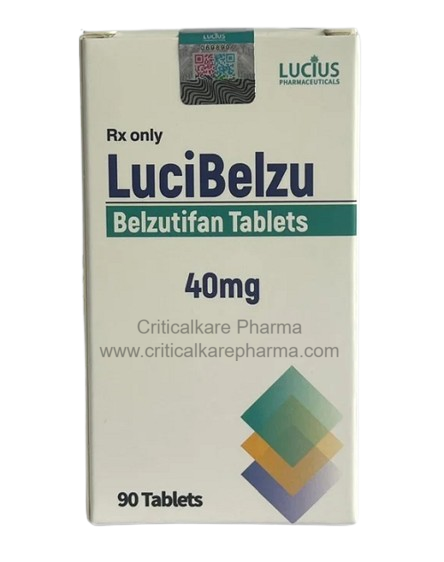
Licibelzu Belzutifan 40mg Tablets 90's
Product Information
What is Licibelzu Belzutifan 40mg Tablets 90's?
Belzutifan 40 mg tablets contain the active ingredient belzutifan, an oral hypoxia-inducible factor-2 alpha (HIF-2α) inhibitor used in the treatment of certain cancers associated with von Hippel-Lindau (VHL) disease and advanced renal cell carcinoma (RCC).
Belzutifan inhibits HIF-2α, a protein involved in cellular responses to low oxygen levels. In VHL-associated cancers, abnormal HIF signaling can contribute to tumor growth and blood-vessel formation. By inhibiting HIF-2α, belzutifan helps reduce signalling that supports tumor growth and progression.
Indications for Licibelzu Belzutifan 40mg Tablets 90's
Adults with von Hippel-Lindau (VHL) disease who require treatment for associated:
- Renal cell carcinoma (RCC)
- Central nervous system (CNS) hemangioblastomas
- Pancreatic neuroendocrine tumors (pNETs)
- When immediate surgery is not required.
Adults with advanced renal cell carcinoma (RCC) with a clear cell component following treatment with a PD-1/PD-L1 inhibitor and a VEGF-TKI.
Therapeutic Effects of Licibelzu Belzutifan 40mg Tablets 90's
Belzutifan is a selective HIF-2α inhibitor.
It works by:
- Binding to and inhibiting HIF-2α activity.
- Reducing abnormal HIF-mediated gene signaling.
- Decreasing production of factors that support tumor growth and angiogenesis.
- Inhibiting proliferation of certain VHL-associated tumor cells.
- Helping slow tumor progression.
The medicine is particularly relevant to tumors in which abnormal VHL/HIF-2α signaling contributes to disease progression.
How to consume Licibelzu Belzutifan 40mg Tablets 90's
- Belzutifan is taken orally once daily, with or without food.
- The currently labeled recommended dosage is 120 mg once daily, equivalent to three 40 mg tablets, unless the treating physician prescribes a modified dose.
- Swallow tablets whole with water.
- Do not crush, chew, or break the tablets unless specifically instructed by a healthcare professional.
- Take the medicine at approximately the same time each day.
- If a dose is missed, follow the prescribing physician's instructions rather than taking an extra dose.
Side Effects of Licibelzu Belzutifan 40mg Tablets 90's
Serious:
- Anemia
- Hypoxia
- Severe fatigue associated with low hemoglobin
- Serious complications associated with reduced oxygen levels
Belzutifan can significantly decrease hemoglobin levels, so blood counts should be monitored before treatment and periodically during therapy.
Common:
- Decreased hemoglobin (anemia)
- Fatigue
- Musculoskeletal pain
- Increased creatinine
- Decreased lymphocyte count
- Increased ALT
- Decreased sodium
- Increased potassium
- Increased AST
- Headache
- Dizziness
- Nausea
- Increased glucose
The exact frequency and pattern of adverse effects can vary according to the indication and patient population.
Drug Interactions
Patients should inform their healthcare provider about all prescription medicines, over-the-counter medicines, vitamins, and herbal supplements they are taking.
Belzutifan has clinically important interactions with:
- UGT2B17 inhibitors—may increase belzutifan exposure and the risk of adverse reactions.
- CYP2C19 inhibitors—may increase belzutifan exposure.
- Sensitive CYP3A4 substrates—belzutifan can decrease their concentrations and potentially reduce their effectiveness.
- Hormonal contraceptives—Belzutifan may reduce their effectiveness and increase the risk of contraceptive failure.
Patients receiving UGT2B17 or CYP2C19 inhibitors require monitoring for anemia and hypoxia, with dose modification where appropriate. Sensitive CYP3A4 substrates should generally be avoided where possible.
Storage & Handling
- Store at 20°C–25°C (68°F–77°F).
- Keep in the original container.
- Protect from excessive heat and moisture.
- Keep out of reach of children.
Expert Advice
- Monitor hemoglobin regularly before and during treatment because anemia is one of the most important adverse effects of belzutifan.
- Monitor oxygen saturation before treatment and periodically thereafter.
- Report shortness of breath, unusual fatigue, dizziness, or other symptoms suggestive of hypoxia promptly.
- Pregnancy should be excluded before initiating treatment in females who can become pregnant.
- Use effective non-hormonal contraception during treatment and for 1 week after the final dose.
- Inform your physician about all medicines being taken, particularly medicines affecting UGT2B17, CYP2C19, and CYP3A4.
- Do not discontinue, increase, or reduce the dose without medical supervision.
- Regular blood tests and clinical follow-up are important throughout treatment.
Worldwide Shipping & Delivery
We provide specialized tracked delivery for Licibelzu Belzutifan 40mg Tablets 90's to multiple countries across the globe. Our logistics network ensures temperature-controlled handling for sensitive oncology medications.
- USA Shipping
- UK Delivery
- UAE & Middle East
- Germany & EU
- Australia
- Canada
Professional Safety Guidelines for Licibelzu Belzutifan 40mg Tablets 90's

Pregnancy
UnsafeBelzutifan can cause embryo-fetal harm and should not be used during pregnancy unless specifically directed by a specialist in exceptional circumstances. Pregnancy testing should be performed before treatment in females who can become pregnant. Effective non-hormonal contraception is recommended during treatment and for 1 week after the last dose, because hormonal contraceptives may be less effective during treatment. Males with partners who can become pregnant should also use effective contraception during treatment and for 1 week after the final dose.

BreastFeeding
UnsafeBreastfeeding is not recommended during treatment and for 1 week after the last dose because of the potential for serious adverse reactions in breastfed children.
Liver
Consult your doctorPatients with liver impairment should inform their healthcare provider before starting treatment. Dose modification may be necessary depending on the severity of hepatic impairment.

Lungs
Consult your doctorBelzutifan can cause hypoxia (reduced oxygen levels in the blood). Oxygen saturation should be assessed before treatment and monitored periodically during therapy. Patients should immediately report symptoms such as: Shortness of breath Difficulty breathing Chest discomfort Unusual tiredness Bluish coloration of the lips or skin Hypoxia can require treatment interruption, dose reduction, or permanent discontinuation depending on severity.

Alcohol
Consult your doctorThere is no specific major alcohol interaction highlighted in the prescribing information. However, alcohol may worsen fatigue, dizziness, or other treatment-related effects. Patients should discuss alcohol consumption with their healthcare provider.

Driving
CautionBelzutifan may cause fatigue, dizziness, or other effects that could impair alertness. Patients should avoid driving or operating machinery if these effects occur.
Kidney
Consult your doctorPatients with kidney impairment should inform their healthcare provider. Appropriate clinical monitoring is recommended, particularly because changes in kidney function and serum creatinine may occur during treatment.