Kimmtrak Tebentafusp tebn 100mcg Injection 1's
Manufacturer: IMMUNOCORE
Salt: TEBENTAFUSP-TEBN 100MCG
Category: Anti-Cancer, Eye-Diseases
Price: $18650
Availability: In Stock
KIMMTRAK contains tebentafusp-tebn, a bispecific protein that directs the body's T cells to recognize and attack cancer cells expressing a gp100-derived peptide presented by HLA-A*02:01.
It binds to the gp100 peptide–HLA complex on tumor cells and to CD3 on T cells, bringing the immune cells into contact with the cancer cells and helping trigger an immune response.
Important: KIMMTRAK is a specialized immunotherapy used to treat certain adults with unresectable or metastatic uveal melanoma, a rare cancer originating in the eye. Treatment is restricted to patients who test positive for the HLA-A*02:01 genetic marker. It carries a boxed warning for potentially life-threatening cytokine release syndrome (CRS) and must be administered under specialist medical supervision.
- Unresectable uveal melanoma: Eye melanoma that cannot be removed surgically.
- Metastatic uveal melanoma: Uveal melanoma that has spread to other parts of the body.
It is intended for adults who test positive for HLA-A*02:01. It is not a general treatment for all types of melanoma, and eligibility must be confirmed by the treating oncologist.
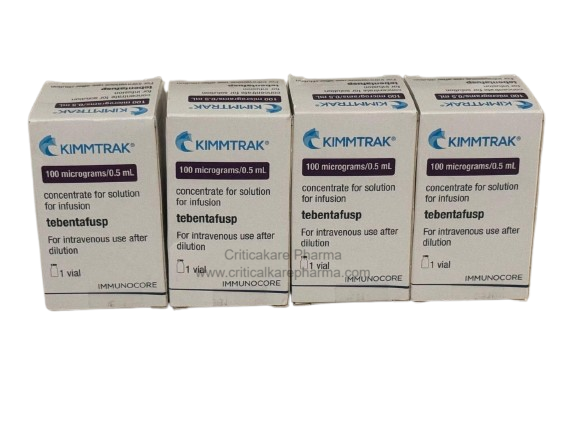
Kimmtrak Tebentafusp tebn 100mcg Injection 1's
Product Information
What is Kimmtrak Tebentafusp tebn 100mcg Injection 1's?
KIMMTRAK contains tebentafusp-tebn, a bispecific protein that directs the body's T cells to recognize and attack cancer cells expressing a gp100-derived peptide presented by HLA-A*02:01.
It binds to the gp100 peptide–HLA complex on tumor cells and to CD3 on T cells, bringing the immune cells into contact with the cancer cells and helping trigger an immune response.
Important: KIMMTRAK is a specialized immunotherapy used to treat certain adults with unresectable or metastatic uveal melanoma, a rare cancer originating in the eye. Treatment is restricted to patients who test positive for the HLA-A*02:01 genetic marker. It carries a boxed warning for potentially life-threatening cytokine release syndrome (CRS) and must be administered under specialist medical supervision.
Indications for Kimmtrak Tebentafusp tebn 100mcg Injection 1's
- Unresectable uveal melanoma: Eye melanoma that cannot be removed surgically.
- Metastatic uveal melanoma: Uveal melanoma that has spread to other parts of the body.
It is intended for adults who test positive for HLA-A*02:01. It is not a general treatment for all types of melanoma, and eligibility must be confirmed by the treating oncologist.
Therapeutic Effects of Kimmtrak Tebentafusp tebn 100mcg Injection 1's
- Targeted immune activity: Helps T cells recognize and attack cancer cells carrying the relevant gp100 peptide–HLA complex.
- Cancer control: May slow disease progression in eligible patients.
- Survival benefit: In the pivotal clinical study of metastatic uveal melanoma, patients receiving tebentafusp had longer overall survival than patients receiving the comparator treatments. Individual responses vary.
KIMMTRAK is not a conventional chemotherapy drug; it works by redirecting immune cells toward tumor cells.
How to consume Kimmtrak Tebentafusp tebn 100mcg Injection 1's
KIMMTRAK is administered by a healthcare professional as an intravenous infusion over approximately 15–20 minutes. It must not be self-administered.
The US-approved dose-escalation schedule is:
Treatment day: Recommended dose:
Day 1: 20 micrograms
Day 8: 30 micrograms
Day 15: 68 micrograms
Thereafter, 68 micrograms once weekly
Monitoring is essential: Patients must be monitored for at least 16 hours following each of the first three infusions because CRS can be serious or life-threatening. Subsequent monitoring is determined by the treating team.
The vial contains 100 micrograms in 0.5 mL; this is the vial strength, not the recommended dose for every infusion. Dose preparation and administration must follow the official protocol.
Side Effects of Kimmtrak Tebentafusp tebn 100mcg Injection 1's
Common:
- Frequently reported adverse reactions include:
- Cytokine release syndrome (CRS)
- Skin rash and itching
- Fever and chills
- Fatigue or weakness
- Nausea and vomiting
- Abdominal pain
- Swelling (oedema)
- Low blood pressure
- Dry skin
- Headache
Laboratory abnormalities can include changes in liver enzymes, creatinine, blood glucose, hemoglobin, lymphocyte count, and phosphate. Regular monitoring is important.
Serious:
- Cytokine release syndrome (CRS)
This can be life-threatening, particularly during the first three infusions. Symptoms may include fever, chills, low blood pressure, dizziness, vomiting, headache, weakness, low oxygen levels, or difficulty breathing.
- Severe allergic or infusion-related reactions
Report breathing difficulty, wheezing, facial or throat swelling, or sudden dizziness immediately.
- Severe skin reactions
A worsening rash, extensive itching, or significant skin swelling may require prompt assessment and treatment.
- Liver injury
Elevated liver enzymes may occur. The oncology team should monitor liver function and assess symptoms such as jaundice, dark urine, or persistent upper abdominal discomfort.
Seek emergency medical care for breathing difficulty, fainting, severe dizziness, confusion, or rapidly worsening symptoms during or after an infusion.
Drug Interactions
Formal drug-interaction studies with KIMMTRAK are limited. Unlike many oral targeted cancer medicines, it is a protein-based immunotherapy and is not primarily cleared through the usual drug-metabolizing CYP enzyme pathways.
Important precautions include:
- Immunosuppressants and corticosteroids: These may affect immune activity. Corticosteroids may nevertheless be required to manage severe CRS or other treatment complications under medical supervision.
- Other anticancer treatments: Combining KIMMTRAK with other immunotherapies or cancer medicines should be decided by the oncology team.
- Medicines affecting blood pressure: KIMMTRAK may cause hypotension; review antihypertensive medicines and monitor blood pressure.
- All other medicines: Inform the treating team about prescription medicines, over-the-counter products, supplements, and herbal preparations.
Do not start, stop, or change any medicine without medical advice.
Storage & Handling
- Store unopened vials refrigerated at 2°C–8°C (36°F–46°F).
- Keep the vial in its original carton to protect it from light.
- Do not freeze or shake.
- Follow the product label and institutional procedures for preparation, handling, and disposal.
- The prepared infusion must be used within the time limits specified in the official prescribing information.
KIMMTRAK requires a reliable cold chain during storage and transportation.
Expert Advice
- Confirm HLA-A*02:01 positivity before treatment.
- Receive treatment only at a facility equipped to monitor and manage CRS and severe infusion-related reactions.
- Attend all scheduled weekly infusions and follow-up appointments.
- Ensure blood pressure, liver function, and other relevant laboratory parameters are monitored.
- Report fever, chills, dizziness, rash, vomiting, or breathing problems promptly, especially after early doses.
- Do not discontinue or delay treatment without consulting the oncologist.
Worldwide Shipping & Delivery
We provide specialized tracked delivery for Kimmtrak Tebentafusp tebn 100mcg Injection 1's to multiple countries across the globe. Our logistics network ensures temperature-controlled handling for sensitive oncology medications.
- USA Shipping
- UK Delivery
- UAE & Middle East
- Germany & EU
- Australia
- Canada
Professional Safety Guidelines for Kimmtrak Tebentafusp tebn 100mcg Injection 1's

Pregnancy
Consult your doctorKIMMTRAK may cause fetal harm based on its mechanism of action. Tell the oncologist if you are pregnant, planning pregnancy or could become pregnant. Effective contraception should be discussed and used as recommended in the official prescribing information.

BreastFeeding
UnsafeBreastfeeding is not recommended during treatment or for at least one week after the final dose, due to the potential risk of serious adverse reactions in the infant.
Liver
Consult your doctorLiver enzyme elevations can occur. Liver function should be monitored before and during treatment, with dose interruption or other management considered by the oncologist if significant abnormalities develop.

Lungs
CautionCRS may cause low oxygen levels and breathing difficulties. Report new breathlessness, wheezing or chest discomfort immediately.

Alcohol
Consult your doctorA specific safe amount has not been established. Ask the treating oncologist about alcohol consumption, particularly if you experience dizziness, low blood pressure, liver abnormalities or treatment-related illness.

Driving
UnsafeAvoid driving if you experience fatigue, dizziness, low blood pressure or other symptoms that affect alertness, particularly after an infusion.
Kidney
Consult your doctorChanges in creatinine have been reported. Kidney function should be monitored as clinically indicated. Patients with existing kidney disease require individual assessment; do not assume the medicine is risk-free in severe renal impairment.